Synaptate is a desktop workspace for scientists. Annotate papers, pull highlights onto a canvas, and build claims backed by the evidence that supports — or refutes — them.
Free while in beta. Your library stays on your machine.
Your highlights are trapped in forty separate PDFs. Your notes don't remember which paper they came from. When your advisor asks "what actually supports this?", you go hunting through folders.
Reference managers organize your citations. They don't help you think.
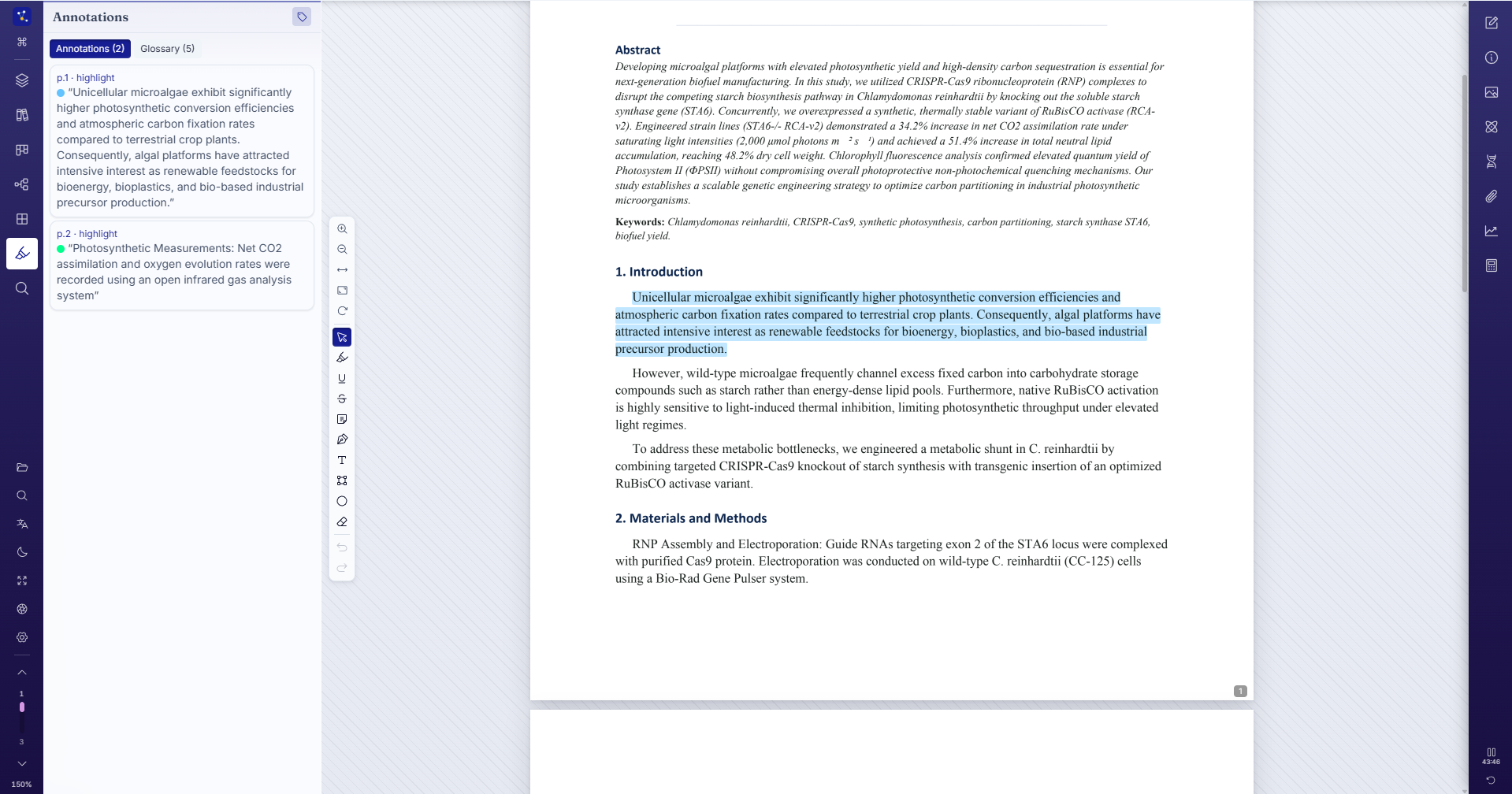
A real scientific PDF reader — highlights, ink, sticky notes, figure extraction. Genes, proteins, and accession numbers are detected as you read, and abbreviations are collected into a glossary automatically.
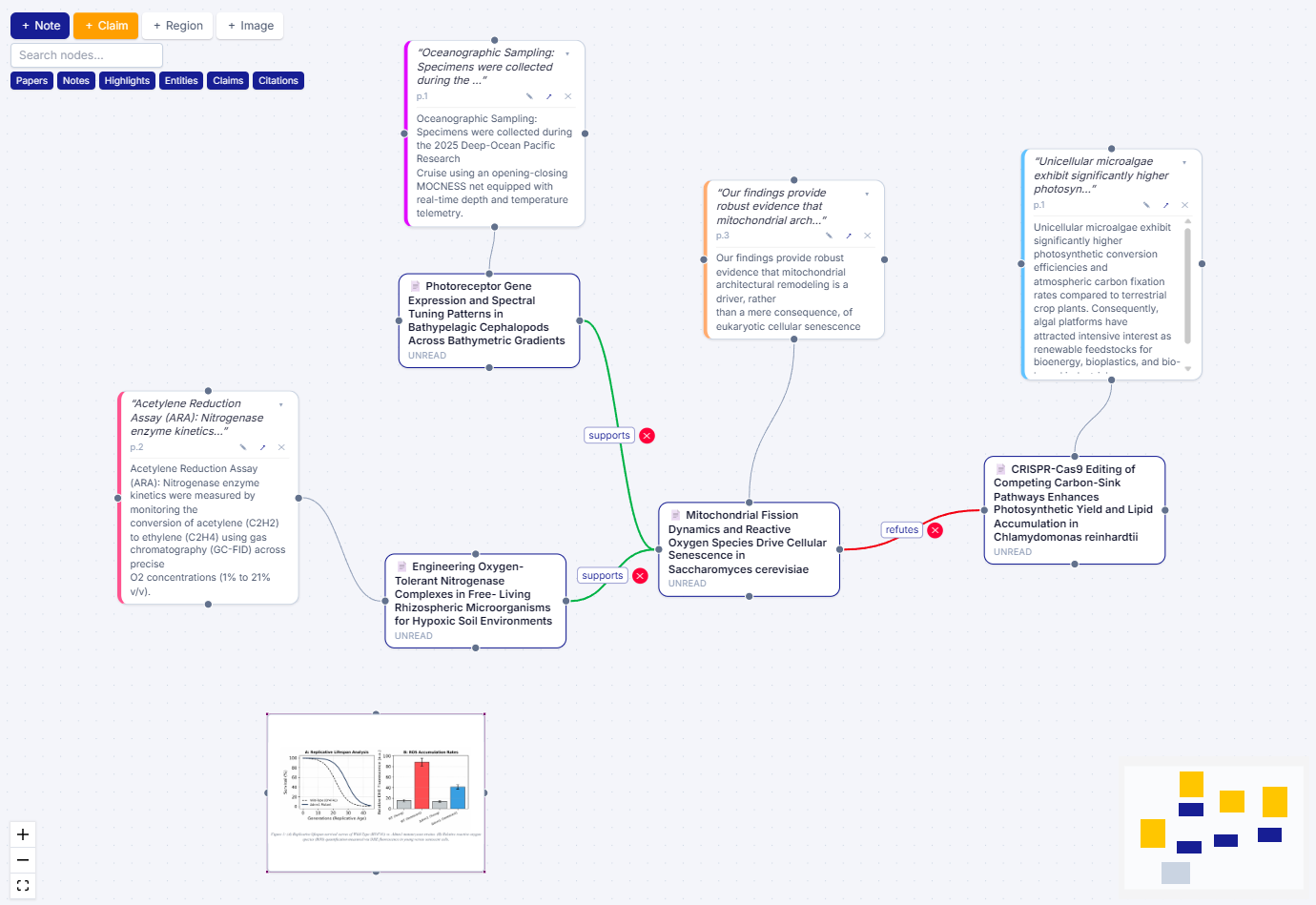
Send any highlight or note to a project canvas. Draw the relationships yourself — label an edge "supports," "contradicts," "replicates" — and watch the argument take shape.
Build claim nodes that tally their own evidence. Compare papers side by side in a matrix of the attributes you define. Export it when you're ready to write.
Make a claim. Connect the papers, notes, and highlights that support it and the ones that don't — label each link "supports" or "refutes." The connections turn green and red so a weak claim looks weak at a glance.
This is the part no reference manager does. It's the difference between having read the literature and understanding it.
Highlight, ink, and annotate directly on the page, with your annotations listed beside it. Landscape figures and scanned PDFs are handled properly, and a floating tool dock keeps every markup tool within reach.
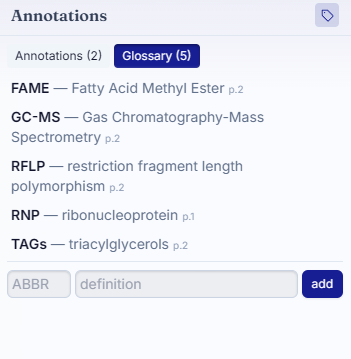
Genes, proteins, chemicals, and accession numbers are detected as you read and link out to UniProt, NCBI Gene, PubChem, and RRID. Abbreviations are harvested into a per-paper glossary automatically — so you stop scrolling back to find what "RNP" or "FAME" meant.
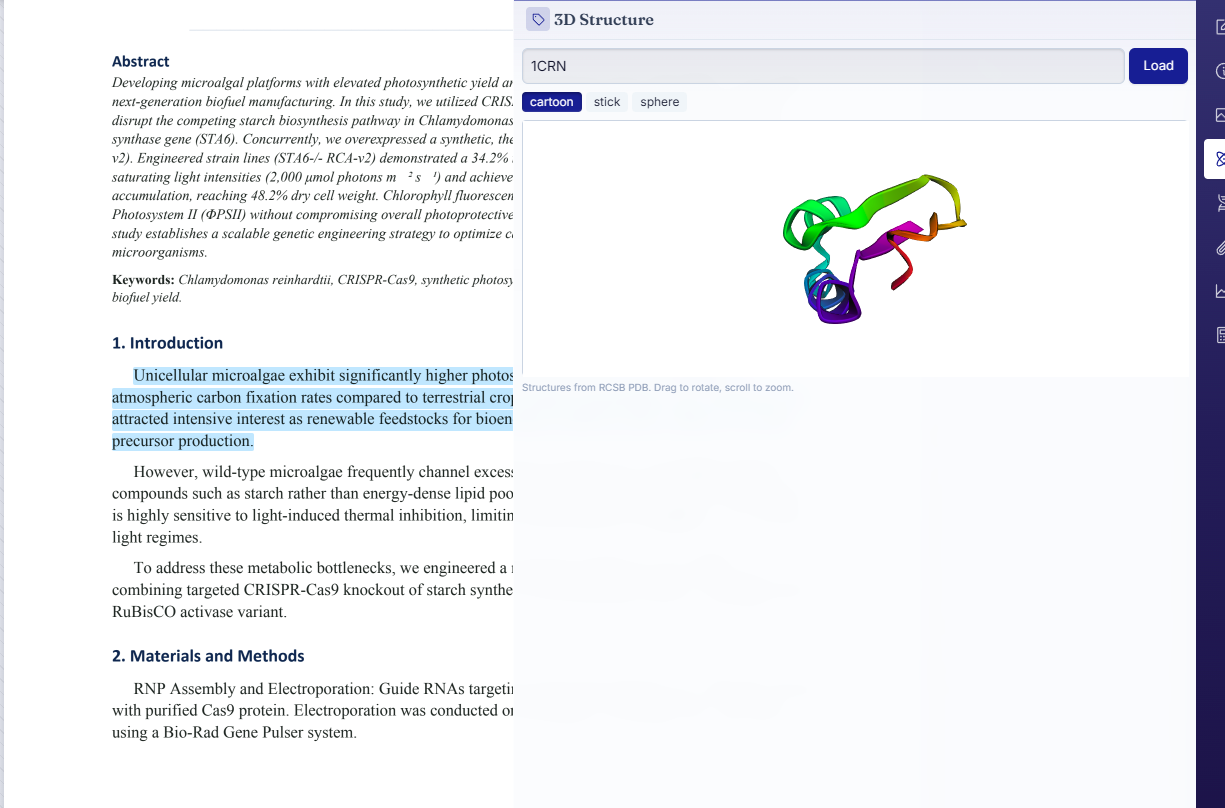
Type a PDB ID and Synaptate renders the 3D protein structure right beside the text — rotate, zoom, and switch between cartoon, stick, and sphere views. Structures are pulled from the RCSB Protein Data Bank.
Synaptate is a desktop application with a local database. No cloud account, no upload, no training on your library. Your PDFs sit in a folder you can open yourself — and if you ever stop using Synaptate, everything you highlighted is still yours.
It doesn't summarize the literature for you either. The connections are the ones you drew — which is why you can defend them.
It doesn't replace your reference manager — it's the step after it.
| Synaptate | Reference managers | AI research tools | Visual note apps | |
|---|---|---|---|---|
| PDF reading & annotation | ✓ | ✓ | partial | partial |
| Science-native entities & glossary | ✓ | — | — | — |
| Manual claim / evidence board | ✓ | — | — | partial |
| Evidence matrix | ✓ | — | partial | — |
| Works offline · data stays local | ✓ | partial | — | partial |
| Automatic AI summaries | — | partial | ✓ | — |
Windows today. macOS and Linux are planned — the app is built on a cross-platform stack.
Free while in beta. Pricing for the full release will be announced before it ships — beta users will get plenty of notice.
No. There's no sign-up and nothing to log into. You download the app and start reading.
No — it's the step after. Keep your reference manager for citations; use Synaptate to read, connect, and synthesize.
In a local folder on your machine, alongside a local database. Nothing is uploaded.
No. Entity detection and glossary building are local, deterministic algorithms — not a language model reading your library.
Yes — notes as Markdown, the matrix as CSV or Markdown, and annotations as XFDF or flattened PDF.
Open something you're reading now, highlight the part that matters, and put it on a canvas. You'll see it in five minutes.
Download for Windows